

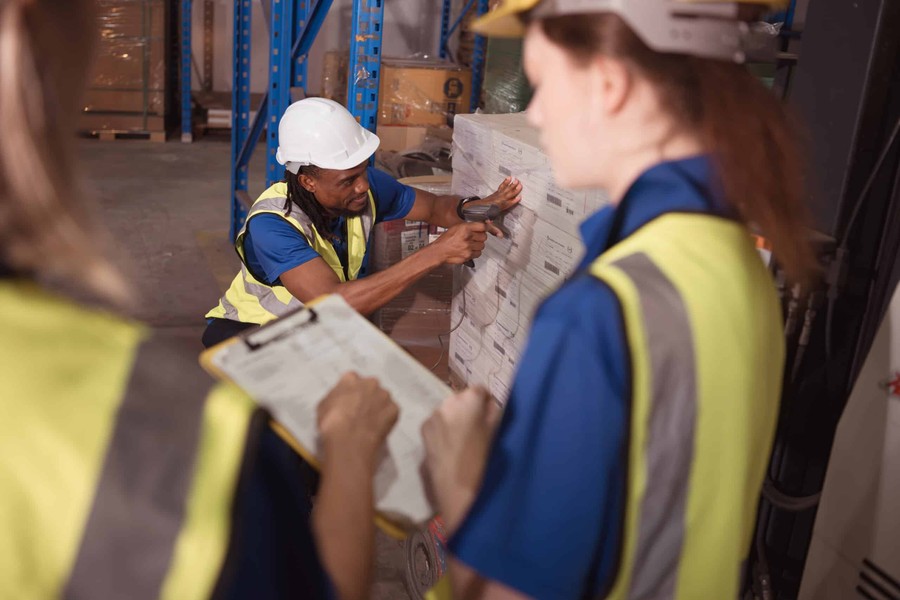
Quick Answer: Manual handling training in Clare (and across Kerry, Donegal, and Kildare) is a legal requirement under the Safety, Health and Welfare at Work (General Application) Regulations 2007. Certified one-day courses typically cost €60–€100 per person, last 6–7 hours, and must be renewed every three years. Irish Manual Handling delivers QQI-accredited training across all four counties and nationwide from Dublin.
Key facts at a glance
| Factor | Detail |
| Legal basis | S.I. No. 299 of 2007 — Safety, Health and Welfare at Work (General Application) Regulations |
| Enforcement body | Health and Safety Authority (HSA), Ireland |
| Renewal frequency | Every 3 years (industry best practice; employers may require sooner) |
| Typical course length | 6–7 hours (one day) |
| Accreditation | QQI (Quality and Qualifications Ireland) Level 4 |
| Average cost (group) | €60–€100 per participant |
| Certificate validity | Nationally recognised; valid across all Irish counties |
| Most at-risk sectors | Healthcare, construction, warehousing, agriculture, hospitality |
Introduction
If your workforce operates in County Clare, Kerry, Donegal, or Kildare, keeping your team safe during lifting and moving tasks is not optional — it is a statutory duty. Manual handling injuries account for more than a third of all workplace injuries reported to the HSA each year in Ireland, yet the majority are entirely preventable with the right training.
This guide covers everything employers and employees need to know about certified manual handling courses in these four counties, including what the law requires, how courses compare, and how to book training that travels to your workplace.
What is manual handling training?
Manual handling refers to any activity that involves lifting, lowering, pushing, pulling, carrying, or supporting a load by hand or bodily force. Under Irish law, employers must provide adequate training to employees who perform such tasks, and that training must be specific to the tasks and risks present in the workplace.
A certified manual handling course covers:
- The anatomy of the spine and how injury occurs
- Legislation and employer / employee duties under Irish law
- Risk assessment using the TILE and MAC tools
- Safe manual handling techniques — including the “kinetic” and “step” lift
- Team handling and the use of mechanical aids
- Practical assessment observed by a qualified instructor
Manual handling training across Clare, Kerry, Donegal, and Kildare
Manual handling in Clare
County Clare’s economy spans healthcare at University Hospital Limerick (serving Clare patients), agri-food processing, tourism hospitality, and construction tied to Atlantic coastline developments. Workers in all these sectors are regularly exposed to manual handling risk. Courses delivered in Clare typically run at your premises or at a central venue in Ennis, and certificates are recognised across Ireland.
Manual handling in Kerry
Kerry’s diverse workforce — from fish processing plants in Tralee to hotel and hospitality staff along the Ring of Kerry — faces a wide range of lifting and moving tasks. On-site training is particularly practical here given the county’s geographic spread. A qualified instructor travelling to your Kerry premises removes the need for staff to travel long distances to attend a course.
Manual handling in Donegal
As Ireland’s most northwesterly county, Donegal presents logistical challenges for workforce training. Sectors including aquaculture, construction, and cross-border retail all carry manual handling risk. Mobile training providers that travel to Donegal can deliver accredited one-day courses on-site, which is cost-effective for teams of four or more employees.
Manual handling in Kildare
Kildare’s proximity to Dublin makes it a hub for logistics, equine industry workers, and pharmaceutical manufacturing — sectors where lifting and load management are central to daily operations. Given the county’s strong transport links, both on-site and public course options are widely available.
Course comparison table
| Feature | On-site (at your premises) | Public / open course | Online theory only |
| Practical assessment included | Yes | Yes | No |
| QQI-accredited certificate | Yes | Yes | No (theory cert only) |
| HSA-compliant | Yes | Yes | Partial |
| Tailored to your tasks | Yes | No | No |
| Minimum group size | 4–6 typically | None | None |
| Typical cost per head | €60–€80 (group rate) | €80–€100 | €20–€40 |
| Travel required | No | Yes | No |
| Covers Kerry / Donegal / Clare / Kildare | Yes (mobile) | Location-dependent | Yes (online) |
Legal requirements: what Irish law says
The Safety, Health and Welfare at Work (General Application) Regulations 2007 (Chapter 4 of Part 2) require employers to assess all manual handling tasks, provide training and information, and use mechanical means where reasonably practicable. Failure to comply can result in enforcement notices, improvement notices, or prosecution by the HSA.
Key obligations include:
- Conduct a risk assessment of all manual handling activities.
- Avoid hazardous manual handling where possible through automation or redesign.
- Provide specific, task-relevant training to all employees who handle loads.
- Maintain training records for inspection.
- Renew training at appropriate intervals (typically every three years).
Actionable tips for employers
- Schedule training before new employees begin hands-on duties, not after an incident occurs.
- Use the HSA’s Manual Handling Passport Scheme to track renewal dates across your workforce.
- Book on-site training for groups of four or more to reduce cost and minimise time away from work.
- Request a course that includes tasks specific to your industry — a healthcare lift differs from a warehouse pallet move.
- Keep signed attendance records and issued certificates in personnel files — these are your evidence of compliance during an HSA inspection.
Frequently asked questions
How often does manual handling training need to be renewed in Ireland?
The HSA recommends renewal every three years. However, some employers and insurance providers require more frequent refresher training, particularly in high-risk sectors such as healthcare and construction.
Is online manual handling training legally valid in Ireland?
Online theory modules can support learning but are not sufficient on their own. Irish law requires training that is specific to actual tasks performed, which means a practical assessment component is necessary for full HSA compliance.
Can one provider deliver manual handling training in Clare, Kerry, Donegal, and Kildare?
Yes. Mobile training providers such as Irish Manual Handling travel nationwide, bringing a qualified instructor to your premises regardless of county. This is particularly useful for businesses operating across multiple locations.
What is the difference between QQI-accredited training and a non-accredited certificate?
A QQI (Quality and Qualifications Ireland) accredited certificate is nationally recognised and accepted by the HSA, most insurers, and public sector employers. Non-accredited certificates may not be accepted as evidence of compliance during an inspection.
How many people are needed to book an on-site course?
Most providers require a minimum of four to six participants for an on-site booking to be cost-effective. Irish Manual Handling can advise on minimum group sizes and pricing for your specific location in Kerry, Clare, Donegal, or Kildare.
Does manual handling training cover patient handling for healthcare workers?
Standard manual handling training covers general principles. Separate patient moving and handling or people handling courses are recommended for healthcare, care home, and disability services staff, as these involve specific risk profiles and techniques.
What are the most common manual handling injuries in Irish workplaces?
Musculoskeletal disorders (MSDs), particularly lower back injuries, are the most frequently reported outcome of manual handling incidents in Ireland. Shoulder and knee injuries are also common, especially in repetitive-task environments.
Is an employer liable if an untrained worker sustains a manual handling injury?
Yes. Under the Safety, Health and Welfare at Work Act 2005, employers have a duty of care to provide adequate training. Failure to train employees who subsequently sustain injuries can result in civil liability claims and regulatory action from the HSA.
How long does a one-day manual handling course take?
A standard certified course runs for six to seven hours, including both the theory component and the practical assessment. Most providers structure this as a full working day, 9am to approximately 4pm.
How do I contact Irish Manual Handling to book training in my county?
You can reach Irish Manual Handling at info@irish-manualhandling.ie or visit their Dublin office at 19 Harcourt Street, Dublin, D02 H364. They deliver accredited training nationwide, including in Clare, Kerry, Donegal, and Kildare.
Key takeaways
Manual handling training is a legal duty for Irish employers under the 2007 General Application Regulations.
Only QQI-accredited courses with a practical assessment element are fully HSA-compliant.
Renew every three years — sooner in high-risk sectors — and always keep signed training records.
On-site courses in Clare, Kerry, Donegal, and Kildare reduce travel time and allow task-specific instruction.
Conclusion
Manual handling injuries are both common and preventable. For businesses operating in County Clare, Kerry, Donegal, or Kildare, investing in certified training is the single most effective step you can take to protect your workforce, meet your legal obligations, and reduce costly absenteeism. Choosing a nationally accredited, mobile training provider means your team receives compliant, practical instruction without leaving your site.
For certified, QQI-accredited manual handling training delivered across all Irish counties, contact:
Irish Manual Handling
19 Harcourt Street, Dublin, D02 H364
