

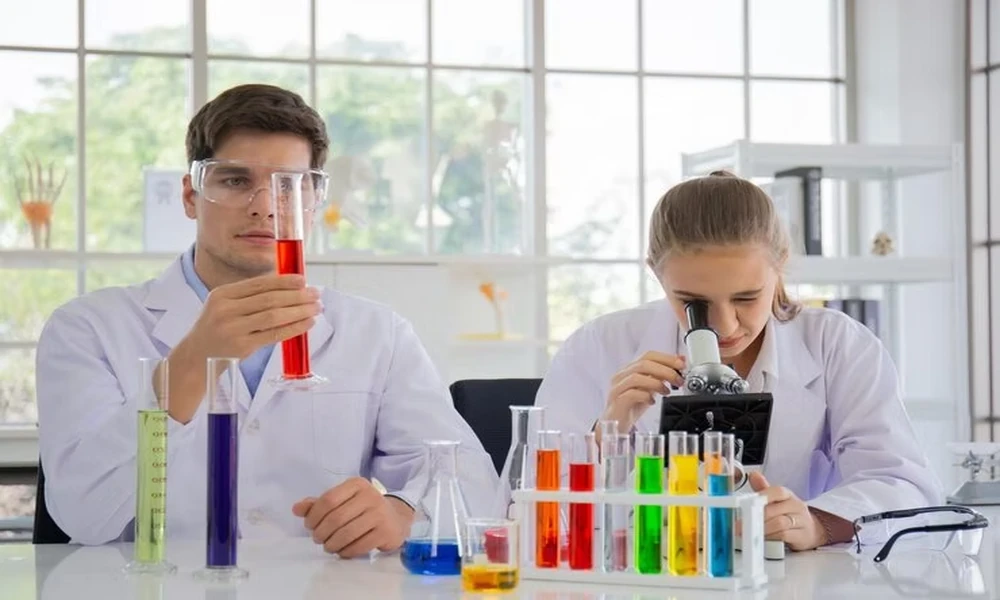
The jump from primary to secondary science surprises many students. Topics become more abstract, explanations require more precision and the volume of content grows. Lower secondary science lays the foundation for the separate sciences students will study later. Targeted lower secondary science tuition helps students build that foundation securely, so that upper secondary chemistry, physics and biology feel like natural extensions rather than overwhelming new subjects. It also helps students develop the study habits that secondary school demands.
Why Lower Secondary Science Matters
Lower secondary science introduces key concepts in physics, chemistry and biology that underpin upper secondary study. Topics such as particles, energy, forces, cells and chemical changes appear again in greater depth later. Students who understand these ideas well find upper secondary topics easier to grasp. Those with gaps often struggle, as later topics assume prior understanding. Teachers often notice that difficulties in Secondary 3 chemistry or physics trace back to a shaky grasp of particles or energy from Secondary 1.
Key Foundation Topics
Lower secondary science covers a range of topics that build towards upper secondary study. Each of these returns in upper secondary with more detail and more mathematics. Important areas include:
- The particulate nature of matter
- Energy and its transformations
- Forces and motion
- Cells and living systems
- Chemical changes and reactions
- Electricity and magnetism
A solid grasp of these topics prepares students well for the separate sciences.
From Description to Explanation
Primary science often focuses on describing observations. Secondary science asks students to explain them using scientific concepts. For example, students move from describing that water evaporates to explaining evaporation in terms of particle movement and energy. Tuition helps students make this shift, building the habit of linking observations to underlying principles. This shift can feel uncomfortable at first, because students must write longer, more reasoned answers than they did in primary school.
Building Scientific Vocabulary
Secondary science introduces many new terms, and using them precisely is essential. Words such as particles, density, current, enzyme and reaction have specific meanings. Students who use terms loosely may lose marks or misunderstand concepts. Building a vocabulary list and practising using terms in explanations helps students communicate scientifically. Many students find it helpful to group terms by topic and practise writing short definitions in their own words.
Developing Practical Skills
Practical work is an important part of secondary science. Students learn to plan investigations, identify variables, take measurements, record data and draw conclusions. These skills are assessed in examinations and are essential for upper secondary practical work. Effective lower secondary science tuition includes practice in designing experiments and interpreting results, even when hands-on laboratory work is limited. Writing a simple plan for an investigation, including what will be changed, measured and kept constant, is a skill worth practising regularly.
Data and Graph Skills
Interpreting graphs and tables is a key skill in science. Students learn to describe trends, calculate values and draw conclusions from data. They also learn to plot graphs accurately, choosing appropriate scales and labelling axes. These skills are used extensively in upper secondary science and in other subjects. Plotting a few graphs by hand each term keeps these skills sharp, even when digital tools are available.
Preparing for Subject Choices
Under Full Subject-Based Banding, students take subjects at different levels based on their strengths, and their performance in lower secondary science influences subject options in upper secondary. Building strong foundations gives students more choice and confidence when selecting subjects. Students who entered Secondary 1 from 2024 will sit the new Singapore-Cambridge Secondary Education Certificate examinations from 2027. Talking with teachers about subject options early, rather than at the end of Secondary 2, gives students time to strengthen areas that matter for their preferred combinations.
Exam Techniques
Strong exam techniques help students show what they know. Timed practice on short sections, rather than full papers only, helps students build speed without losing accuracy. Useful habits include:
- Reading questions carefully and identifying command words
- Using scientific terms accurately
- Linking explanations to concepts
- Showing working in calculations
- Checking answers for completeness
Practising with varied questions and reviewing feedback builds these habits.
Building Good Study Habits
Lower secondary is a good time to develop effective study habits. Regular review, concept maps, summary notes and self-testing help students retain information. Spacing revision over time is more effective than cramming. These habits will serve students throughout secondary school and beyond. Short, regular review sessions of fifteen to twenty minutes are often more effective than long weekend revision marathons.
Choosing the Right Support
Look for tuition that diagnoses gaps, explains concepts clearly and connects lower secondary topics to upper secondary study. Small group or individual settings allow targeted support. Reviewing a structured science programme for Secondary 1 to 4 can help parents see how foundations are built. Ask whether lessons are aligned with the school’s scheme of work, so that tuition reinforces rather than confuses what students learn in class.
A Simple Habit
After each topic, ask the student how it might connect to chemistry, physics or biology later. Making those links early makes upper secondary study far less daunting.
