
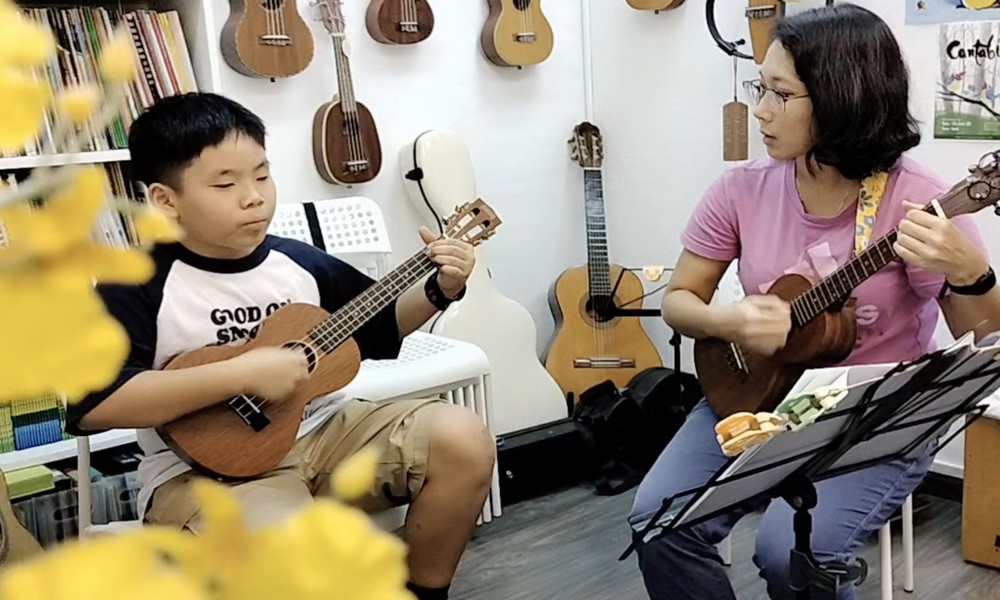
Ukulele lessons Singapore students of all ages take are one of the most accessible entry points into music. The instrument is small, affordable and far less demanding on the fingers than a guitar. Four strings instead of six, a body that fits comfortably in a child’s hands, and a cheerful sound that rewards early effort make the ukulele a practical first instrument and a genuinely enjoyable one for adults who want to play music without years of technical groundwork.
Why the Ukulele Works for Beginners
The ukulele’s tuning means that simple chord shapes are within reach after just a few lessons. A beginner can play three or four chords and use them across dozens of songs, which creates a sense of real musical achievement early in the learning process. That early payoff is significant. It keeps students motivated through the parts of learning an instrument that are genuinely difficult.
Children benefit particularly from the ukulele’s physical accessibility. The neck is narrow, the strings are nylon rather than metal, and the instrument does not require the strength that a full-size guitar demands. Children as young as five can hold and play a ukulele comfortably.
Adults find the ukulele a forgiving place to start. Many adult beginners carry anxiety about learning music after childhood, and the ukulele’s reputation as a fun, informal instrument reduces that pressure. The goal can simply be to enjoy playing, and the instrument supports that goal well.
What Ukulele Lessons Cover
Structured ukulele classes Singapore cover more than chord shapes and strumming patterns. A good teacher introduces you to the instrument’s history, tuning, posture and the mechanics of sound production. From there, lessons progress through chord transitions, rhythmic variety, fingerpicking techniques and eventually reading basic chord charts or tablature.
Singing while playing is a natural extension of ukulele practice. Unlike the piano, which separates melody from accompaniment clearly, the ukulele encourages players to sing along from the beginning. This integration of voice and instrument is one of the reasons the ukulele produces such immediate musical satisfaction.
“The arts are not a luxury. They are essential to how we live and how we see the world.” – George Yeo, former Singapore Minister for Information and the Arts.
Students interested in performance have a clear pathway. Many ukulele groups perform at community events, school concerts and corporate functions. Singapore has an active ukulele community, and a student who reaches an intermediate level will find no shortage of opportunities to play with others.
Solo or Group Lessons
Both formats have real value. Individual ukulele lessons Singapore allow the teacher to focus entirely on your technique and progress at your pace. Mistakes are caught immediately, and the lesson plan adapts to your specific strengths and weaknesses.
Group lessons offer a different dynamic. Playing alongside others teaches you to listen, to keep tempo, and to recover when you lose your place without stopping everyone else. Group settings are also typically less expensive per lesson than one-on-one sessions, and many students find them more motivating because of the shared energy.
Many studios offer both, and it is not uncommon for a student to take private lessons while also attending a group class for the social and performance practice element.
Choosing a Studio in Singapore
When selecting a ukulele class Singapore provider, look at the teacher’s experience with your specific age group. A teacher who excels with children may not be the best fit for an adult learner, and vice versa. Ask what repertoire the studio typically works through and whether it aligns with what you want to play.
Trial lessons are always worth taking. A single session tells you whether the teaching style matches how you learn, whether the studio environment is comfortable, and whether the pace feels right. Most reputable studios in Singapore offer a trial option before you commit to a package.
Location and scheduling matter practically. A studio that is difficult to reach or has limited class times will make attendance harder to sustain, and consistency of attendance is the single most important factor in learning any instrument.
Progress and Practice at Home
Progress in ukulele lessons Singapore students see is directly tied to what happens between sessions. Even fifteen to twenty minutes of daily practice produces faster results than a single long session once a week. Your teacher will give you specific exercises and pieces to work on at home. Treating those assignments seriously is what separates students who improve quickly from those who plateau.
Record yourself playing. The gap between how you think you sound and how you actually sound can be significant in the early stages, and recording gives you honest feedback between lessons.
A ukulele bought for ukulele lessons Singapore practice does not need to be expensive. A reputable entry-level instrument in the S$60 to S$120 range is sufficient for a beginner and allows you to practise properly at home.
Ukulele lessons Singapore students who approach the instrument with genuine curiosity, practise regularly, and give themselves permission to make mistakes will find it one of the most rewarding instruments they ever pick up.